THE JOURNAL — NEPAL · 8 min
The Morning the Himalayas Turned Gold
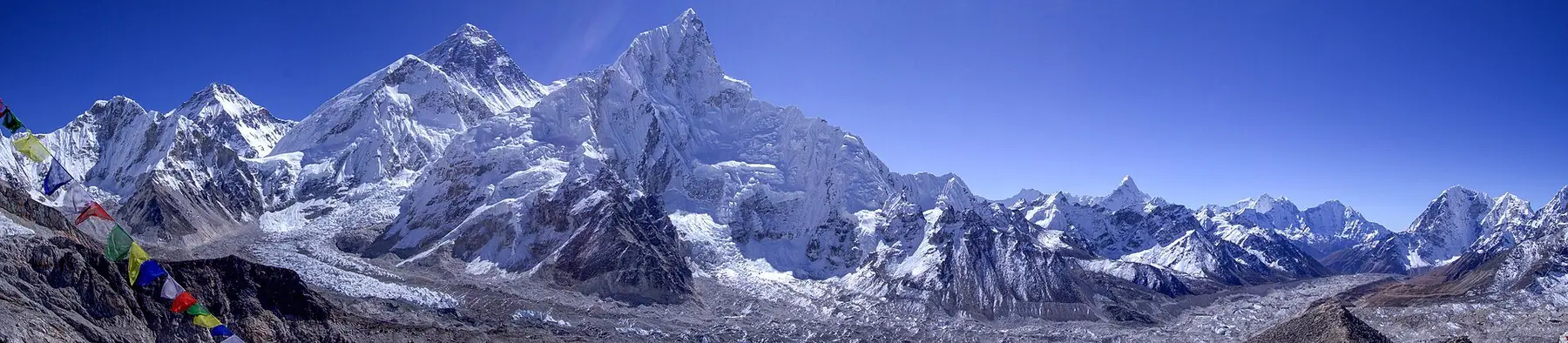
Kala Patthar, 05:40, minus twelve — and the moment the sun's first light ran the range like a fuse.
We left Gorak Shep in the dark, headtorches strung out up the ridge like a festival that hadn't started yet. Kala Patthar is not a mountain; it is a viewpoint pretending to be one — a 5,545-metre bump on Pumori's skirt that happens to hold the finest stage on Earth.
At minus twelve the camera batteries started dying faster than we could swap them. And then the show began — not where we expected. The light came from behind, from Tibet, and hit Everest's summit pyramid first, a single gold point in a black-and-blue world. Then Nuptse. Then Lhotse, in sequence, the whole ridge running gold like a fuse being lit peak by peak.
Nobody spoke for ten minutes. There is a particular silence that only happens when a group of people simultaneously understands that photography is not going to work. You put the camera down. You stand in the wind. You watch the highest place on Earth change colour, and something in your scale of things quietly recalibrates.
The Descent
We walked down into Gorak Shep for tea by 08:00, and the whole thing felt already like a memory from years ago — the way the big mountains do it to you. Everest Base Camp itself, the next morning, was rock and ice and prayer flags and the strange industrial beauty of expedition tents. But Kala Patthar was the morning. The fuse. The gold.
TRAVEL THIS STORY